

“I am convinced by the importance of making science understandable and accessible to every audience”
“Estoy convencida de la importancia de hacer que la ciencia sea comprensible y accesible para todas las audiencias”
“Je suis convaincue par l'importance de rendre la science compréhensible et accessible à tous les publics"
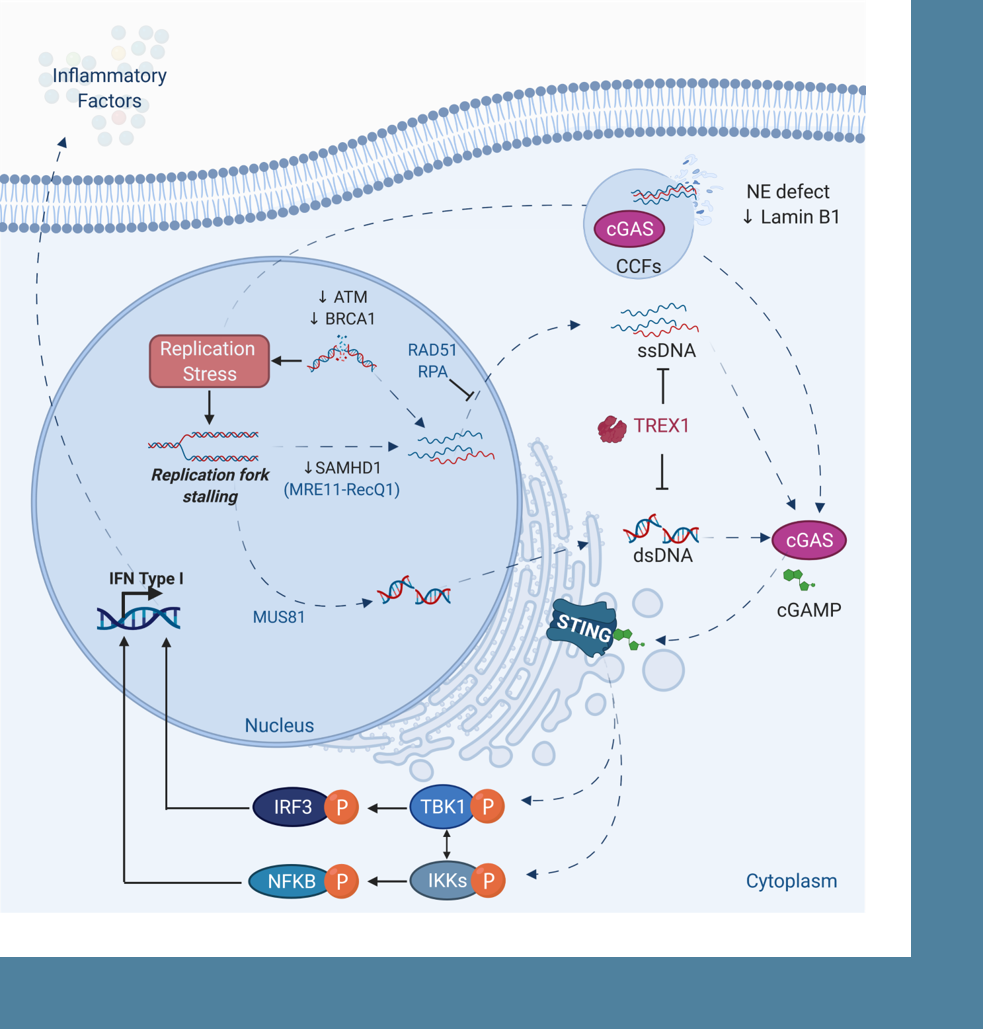
Double-stranded breaks (DSB), the most toxic DNA lesions, are either a consequence of cellular metabolism, programmed as in during V(D)J recombination, or induced by anti-tumoral therapies or accidental genotoxic exposure. One origin of DSB sources is replicative stress, a major source of genome instability, especially when the integrity of the replication forks is not properly guaranteed. To complete stalled replication, restarting the fork requires complex molecular mechanisms, such as protection, remodeling, and processing. Recently, a link has been made between DNA damage accumulation and inflammation. Indeed, defects in DNA repair or in replication can lead to the release of DNA fragments in the cytosol. The recognition of this self-DNA by DNA sensors leads to the production of inflammatory factors. This beneficial response activating an innate immune response and destruction of cells bearing DNA damage may be considered as a novel part of DNA damage response. However, upon accumulation of DNA damage, a chronic inflammatory cellular microenvironment may lead to inflammatory pathologies, aging, and progression of tumor cells. Progress in understanding the molecular mechanisms of DNA damage repair, replication stress, and cytosolic DNA production would allow to propose new therapeutical strategies against cancer or inflammatory diseases associated with aging. In this review, we describe the mechanisms involved in DSB repair, the replicative stress management, and its consequences. We also focus on new emerging links between key components of the nuclear envelope, the lamins, and DNA repair, management of replicative stress, and inflammation.
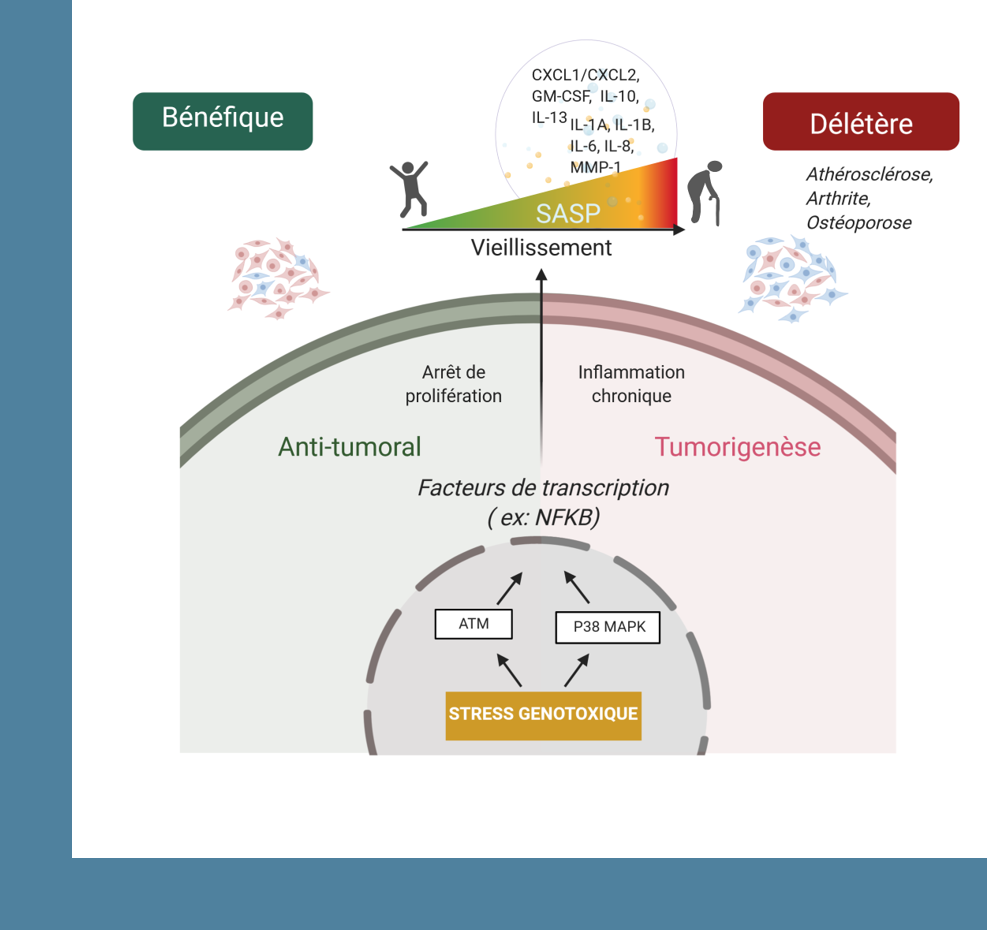
Le vieillissement est associé à une accumulation de cellules sénescentes produisant un environnement cellulaire inflammatoire qui pourrait expliquer différentes maladies liées à l’âge. Diverses situations menant à la sénescence sont liées à la présence de dommages de l’ADN. De plus, de nombreux syndromes progéroïdes sont associés à une instabilité du génome ou de la structure nucléaire. Nous discuterons du lien étroit existant entre l’altération des lamines, composants de l’enveloppe nucléaire, et le vieillissement cellulaire. Nous verrons que l’altération de l’enveloppe nucléaire, comme celle observée dans la Progéria, est aussi associée à des défauts de réparation de l’ADN, à une persistance de dommages de l’ADN et à un phénotype inflammatoire.

